


Posted On 16-07-2026

A software developer builds applications, websites, and software systems using programming languages. A data analyst studies data to help businesses make better decisions. Software development suits you if you enjoy coding and building products. Data analytics suits you if you enjoy statistics, dashboards, and business insights.
Software developer vs data analyst is a frequent comparison among those planning a career in technology after earning a computer science or related degree. A software developer career and a data analyst career both offer strong demand for an IT career in 2026 across Kerala and India. This guide compares skills, tools, and salary growth so you can choose the best IT career path with confidence.
What Does a Software Developer Do?
What Does a Data Analyst Do?
What Are the Key Differences Between a Software Developer and a Data Analyst?
What Tools Do Software Developers and Data Analysts Use?
What Skills Do You Need for Each Career?
What Is the Salary and Career Growth Outlook in 2026?
Which Career Is Easier to Learn?
Which Career Should You Choose?
How Do You Know You're Ready for a Software Development Career?
How Do You Know You're Ready for a Data Analytics Career?
Can You Transition Between These Careers?
Frequently Asked Questions
Key Takeaways
Conclusion
A software developer writes code to build applications, websites, and software systems. This career covers frontend work, backend work, and full stack work, with each specialization using a different set of programming languages and tools.
A frontend developer builds the parts users see and click, often using JavaScript and React.
A backend developer builds the logic and database layer, often using Java, Python, or Node.js.
A full stack developer handles both the frontend and backend of an application.
Daily tasks include writing code, fixing bugs, building APIs, testing features, and deploying updates.
Git and GitHub are the standard tools for tracking code changes and team collaboration.
Software developers in Kerala's IT sector often work on projects for product companies, startups, and MNCs based in cities like Kochi and Trivandrum.
A software engineer role can grow into senior developer, tech lead, or architect positions over time.
A data analyst collects data, cleans it, and turns it into reports that guide business decisions. This career centers on finding patterns in numbers and presenting them in a way that non-technical teams can act on.
Data collection starts with gathering raw data from company systems.
Data cleaning removes errors and duplicates before any analysis begins.
Dashboard building uses tools like Power BI or Tableau to present findings visually.
SQL is the core skill for pulling and organizing data from databases such as MySQL and PostgreSQL.
Excel remains a daily tool for quick calculations and reporting.
A data analyst role often grows into a data scientist position, where Python libraries like Pandas and NumPy come into use for deeper analysis, opening the door to a full data science career.
Business analyst roles overlap closely with data analyst roles, since both convert numbers into decisions for company leadership.
To simplify your career decision in 2026, the table below highlights the differences in coding, SQL skills, and day-to-day tools.
|
Feature |
Software Developer |
Data Analyst |
|
Main Work |
Build software |
Analyze data |
|
Coding |
High |
Moderate |
|
SQL Usage |
Medium |
High |
|
Math |
Basic |
Moderate |
|
Creativity |
High |
Medium |
|
Business Knowledge |
Medium |
High |
|
Daily Tools |
VS Code, Git |
Power BI, Tableau |
|
Career Growth |
Strong |
Strong |
|
AI Impact |
AI-assisted coding |
AI-assisted analytics |
Both roles show strong career growth through 2026. AI tools now support both jobs instead of replacing them, since developers use AI for code suggestions and analysts use AI for faster reporting.
Software developers rely on coding and version-control tools, while data analysts rely on query and dashboard tools, since the two roles solve different problems day to day.
|
Software Developer Tools |
Data Analyst Tools |
|
VS Code |
Microsoft Power BI |
|
Git |
Tableau |
|
Docker |
Microsoft Excel |
|
Postman |
SQL |
|
React |
Pandas |
|
Node.js |
NumPy |
VS Code and Git are the starting point for almost every developer role, whether the stack is Python, Java, or PHP. Docker helps developers package applications for deployment. Postman is used to test APIs during development. On the analytics side, SQL is used to query databases, while Power BI and Tableau turn that data into visual dashboards. Pandas and NumPy come into use once an analyst moves into deeper data science work.
Software developers need strong programming skills, while data analysts need strong SQL and statistics skills, with a small overlap between the two.
Programming languages such as Python, Java, or JavaScript
Git for version control
Building and using APIs
Working with databases like MySQL or PostgreSQL
Problem-solving for debugging code
SQL for querying data
Excel for calculations and reporting
Statistics for interpreting data patterns
Dashboarding using Power BI or Tableau
Data visualization for presenting findings clearly
A developer roadmap usually starts with one programming language and grows into a full stack career. An analytics career roadmap usually starts with Excel and SQL and moves toward Python and dashboarding tools, often leading toward a data science career.
Both software developers and data analysts find entry-level opportunities across Kerala's IT sector in 2026, with pay that tends to grow as skills and experience increase.
Entry-level software developer salary and entry-level data analyst salary generally start in comparable ranges at product companies, startups, and IT service firms.
Mid-level growth depends on specialization: a software developer who learns full stack development or cloud tools often moves faster into senior roles.
A data analyst who learns Python and machine learning basics often moves toward data scientist positions with higher pay.
Senior-level progression in both fields leads to leadership roles, such as engineering lead or analytics manager.
Remote opportunities continue to grow for both roles, with global companies like Google, Microsoft, and Amazon hiring distributed teams for engineering and analytics functions.
Demand for both skill sets extends beyond Kerala, giving local professionals access to data analytics jobs and development roles in the wider national and global job market.
Software development has a steeper learning curve than data analytics in the early stages, though both paths demand ongoing effort as they progress.
Learning to code requires understanding logic, syntax, and debugging, which takes consistent practice over months.
Continuous learning stays part of a software development career, since frameworks and languages keep updating.
Data analytics has an easier entry point for beginners, since Excel and basic SQL can be learned faster than a full programming language.
Growing further into data analytics requires statistics, visualization skills, and business understanding, which takes its own time to build.
Software development demands more technical depth early on, while data analytics demands more business and statistical thinking as it grows.
Neither career is easier overall, since the effort simply shifts to a different stage of the learning journey.
The software developer vs data analyst decision gets easier once you match it against your natural interests, since interest points toward the right career more clearly than salary comparisons do.
|
If You Enjoy... |
Choose... |
|
Building apps |
Software Development |
|
Solving coding problems |
Software Development |
|
Data visualization |
Data Analytics |
|
Business decision-making |
Data Analytics |
|
Creating websites |
Software Development |
|
Working with dashboards |
Data Analytics |
This decision matrix works as a starting filter. Reading through the signs in the next two sections narrows the choice further.
A software development career fits you if the daily habits below already feel natural, since these traits match what recruiters at product companies and MNCs look for when hiring junior developers in 2026.
Enjoy coding in languages like Python, Java, or JavaScript
Love building projects, from small scripts to full applications with React or Node.js
Comfortable debugging code using tools like VS Code and Git
Interested in web or app development as a long-term specialization
Want a full stack career that covers both frontend and backend work
If these qualities describe you, enrolling in our Python Full Stack with GenAI course can help you build the practical coding skills employers expect from entry-level software developers.
A data analytics career fits you if these habits already describe how you think, since companies hiring analysts in 2026 look for comfort with numbers, tools like Excel and Power BI, and patience for detailed work.
Enjoy working with numbers and spreadsheets on a regular basis
Like finding patterns in raw data before others notice them
Comfortable with Excel formulas and basic SQL queries
Interested in business insights that guide company decisions
Curious about data science and tools like Python, Pandas, or Tableau
If this career path matches your interests, our Data Analytics with GenAI course provides hands-on training in SQL, Power BI, Excel, Python, and real-world analytics projects.
Yes, professionals can move between software development and data analytics through structured skill upgrades rather than starting over. This flexibility is one reason both a coding career and a programming career built on data skills stay valuable over time.
A software developer can grow into a data engineer role, then into an AI engineer role, since both build on strong programming and system-building skills.
A data analyst can grow into a data scientist role, then into a machine learning engineer role, since both build on statistics and Python.
SQL is a transferable skill used in both careers for handling data.
Python supports both software development and data analytics work.
Automation skills help reduce repetitive work in both roles.
Cloud platform knowledge supports growth in both directions, since most companies now deploy applications and data pipelines on the cloud.
Software developers primarily build software products.
Data analysts convert raw data into business insights.
Software development generally requires stronger programming skills.
Data analysts rely more on SQL, Excel, and Power BI.
AI is changing both careers, but demand remains high for skilled professionals.
Your interests matter more than salary when choosing between these careers.
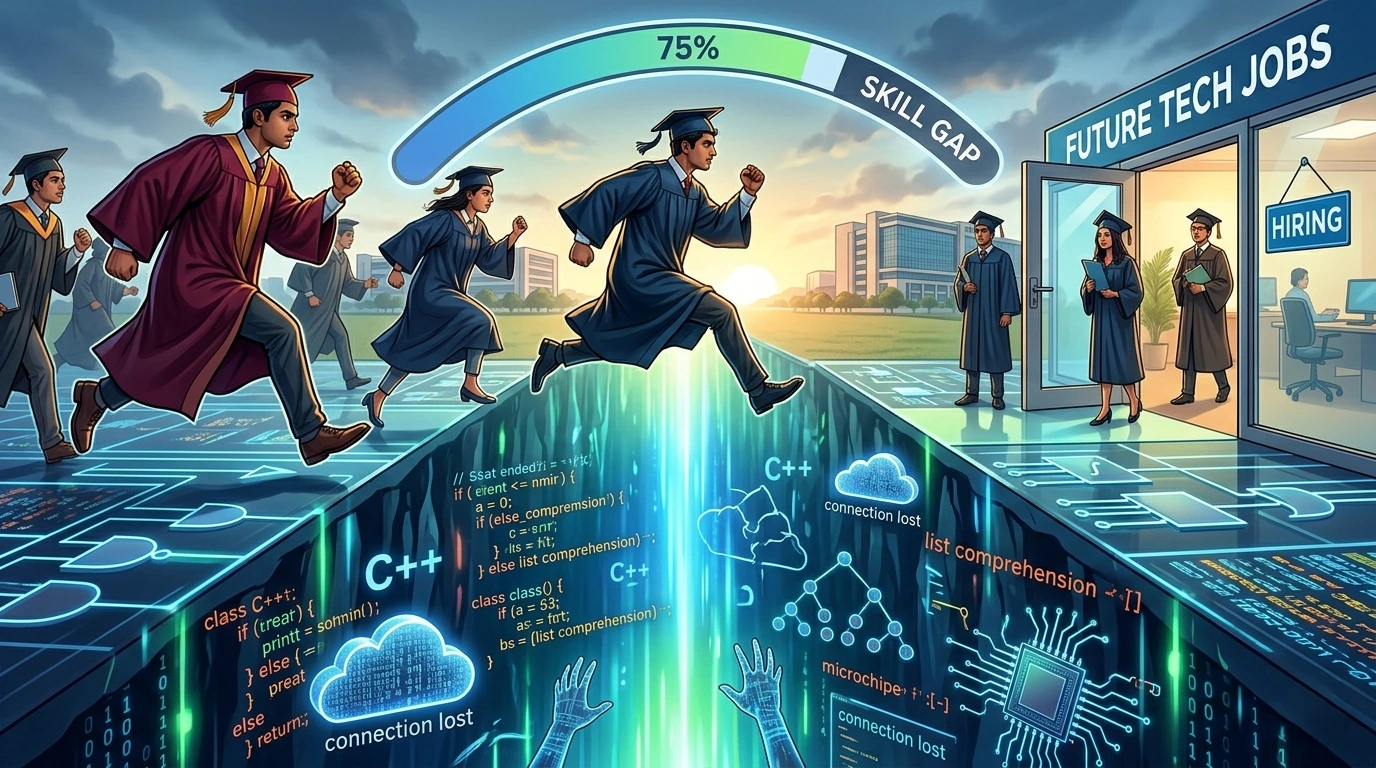
Building the right skills is equally important. Learn why many graduates struggle to get hired in our guide on the skill gap in the IT industry.
Choosing between a software developer career and a data analyst career comes down to your interests, strengths, and long-term goals. Building applications and solving coding problems point toward software development. Working with data, dashboards, and business insights point toward data analytics. There is no single best IT career between the two, since both paths lead to strong AI careers as GenAI tools continue to reshape the industry in 2026.
If you're looking for industry-focused training with hands-on projects and placement assistance, explore QIS Academy, a leading software training institute in Kerala.
QIS Academy offers training for both directions, including Full Stack Development with GenAI and Data Analytics with GenAI, so you can build the right skill set for whichever path fits you.
You can also explore our student reviews and learning experience on our Google Business Profile before choosing the right career path.
Neither is better. This question also comes up as software engineer vs data analyst, and the answer stays the same: choose developer work if you enjoy building products, and analyst work if you enjoy interpreting data.
Both offer comparable entry-level pay in 2026. Growth depends more on added skills, like cloud or machine learning, than on the career choice itself.
Basic SQL is mandatory. Full programming skills like Python or Java are not required at the entry level.
Yes. Learning a language like Python or Java, along with Git and APIs, is enough to make the switch.
Neither is fully automation-proof. AI tools assist coding and analytics work, but both still need a professional to direct and check the output.
It depends on strengths. Strong logical thinkers often prefer software development; those comfortable with numbers often prefer data analytics.

Posted On 04-09-2026

Posted On 04-09-2026

Posted On 18-08-2026

Posted On 10-08-2026
Posted On 22-05-2026

Posted On 21-01-2026